

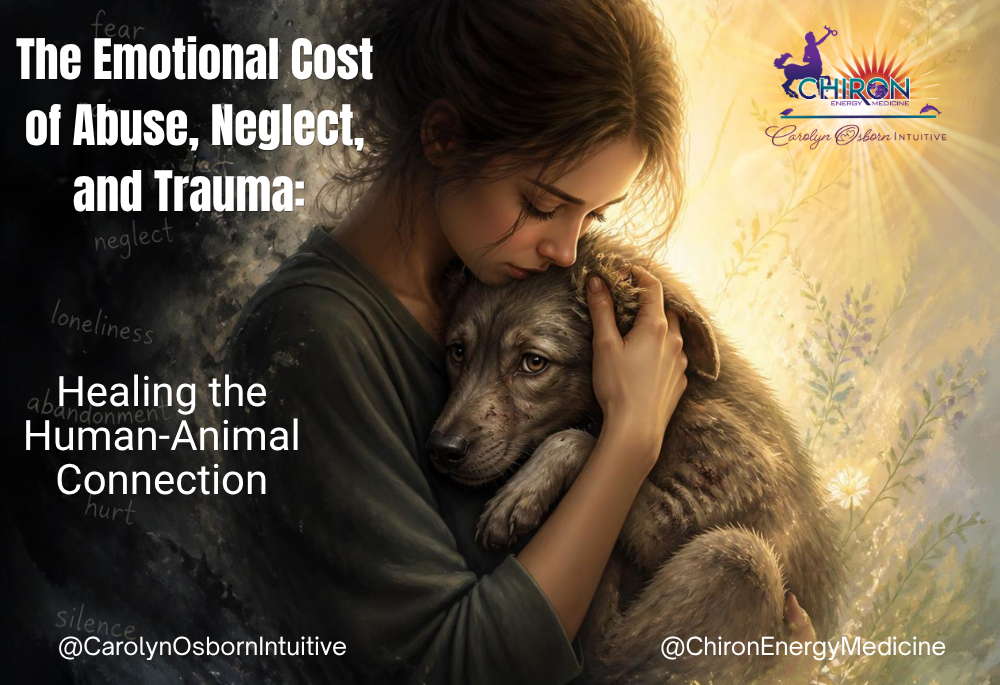
Trauma leaves a mark—whether it occurs in a human heart or an animal's spirit. While the circumstances may differ, the emotional impact of abuse, neglect, fear, abandonment, and betrayal often creates similar patterns of behavior, mistrust, anxiety, and self-protection.
Animals and humans share something profound: the need to feel safe, loved, and understood. When those needs are not met, emotional wounds can develop that influence behavior long after the original event has passed.
The good news is that healing is possible. With patience, awareness, compassionate care, and supportive modalities, both animals and humans can move beyond survival mode and rediscover trust, connection, and emotional balance.
Trauma is not just the event itself. Trauma is the emotional, mental, and sometimes physical impact that remains after a distressing experience.
What may be traumatic includes:
For Humans
Physical abuse
Emotional abuse
Verbal abuse
Sexual abuse
Neglect
Abandonment
Bullying
Witnessing violence
Loss of a parent or loved one
Chronic criticism or rejection
For Animals
Physical abuse
Abandonment
Neglect
Hoarding situations
Harsh training methods
Being chained or confined
Lack of food, water, or medical care
Frequent rehoming
Loss of an owner or animal companion
Living in chaotic or fearful environments
Whether human or animal, trauma often creates the same underlying question: "Am I safe?" Until that question is answered, many behaviors are driven by fear rather than trust.
What Trauma Looks Like in Behavior - Often, people focus on behaviors without looking at what may be causing them. Behavior is communication. A traumatized animal or person is frequently expressing an unmet need rather than simply being difficult.
Signs of Trauma in Animals
Trauma may show up as:
Excessive barking, meowing, whinnying
Aggression
Fearfulness
Separation anxiety
Hiding
Hypervigilance
Resource guarding
Destructive behaviors
Inability to relax
Overreacting to everyday situations
Many rescued animals are labeled as "behavior problems" when they are actually demonstrating trauma responses.
Signs of Trauma in Humans
Trauma can appear as:
Anxiety
Depression
People-pleasing
Difficulty trusting others
Perfectionism
Emotional numbness
Anger or irritability
Acting out
Hyper-independence
Fear of abandonment
Difficulty setting boundaries
Many adult behaviors can be traced back to childhood experiences where emotional needs were not fully met. One major difference between animals and humans is how trauma is processed.
Animals tend to experience emotion fully in the moment. Once the threat has passed, many animals naturally return to balance if given the opportunity and support. Humans, however, often replay experiences repeatedly.
A child who experiences criticism, neglect, rejection, or abuse may unconsciously carry those emotional wounds into adulthood. The body remembers.
A single event may create beliefs such as:
I'm not safe.
I'm not lovable.
I don't matter.
The world is dangerous.
People can't be trusted.
These beliefs can influence relationships, careers, health, and self-worth for years.
Why Animals Are Often Better at Letting Go - Animals live in the present. They don't spend hours replaying conversations from five years ago. They don't generally create stories about what happened. Once safety is restored, animals often show remarkable resilience and adaptability. This is one of the reasons animals can become such powerful teachers.
They remind us that healing happens when we return to the present moment and reconnect with feelings of safety. However, some animals do retain emotional imprints from traumatic experiences, especially when the trauma was severe, ongoing, or occurred during critical developmental stages. These emotional imprints may continue to trigger behavioral responses long after the danger has ended. Those emotional triggers can be released to free them from the traumatic event.
Shared Trauma Between Humans and Animals - Many people notice a strong connection with certain animals, especially rescues. Sometimes an animal seems instantly drawn to a particular person. One reason may be that both have experienced similar emotional wounds.
A survivor of neglect may be deeply compassionate toward a neglected animal.
A formerly abused dog or cat may recognize calm, gentle energy in someone who has also endured hardship.
While we cannot know exactly what an animal is thinking, many people report that relationships with animals feel healing because they are built on mutual understanding and acceptance. Sometimes two wounded hearts help each other heal.
Understanding Emotional Triggers - Triggers are situations, sounds, smells, people, environments, or experiences that unconsciously remind someone of a past traumatic event.
For humans, triggers might include:
Certain voices
Conflict
Rejection
Feeling ignored
Specific locations
Particular smells
For animals, triggers may include:
Raised voices
Specific objects
Certain types of people
Confinement
Loud sounds
Fast movements
Veterinary visits
The trigger itself is usually not the real problem. It is the memory and emotional charge connected to it.
Healing Beyond the Behavior - True healing occurs when we move beyond simply managing symptoms and begin addressing the underlying emotional experience. This often requires a combination of approaches that support emotional, physical, mental, and energetic well-being.
Traditional Approaches
For humans:
Counseling
Trauma-informed therapy
Somatic therapies
Mindfulness practices
Support groups
Cognitive behavioral approaches
Energy Medicine
For animals:
Positive reinforcement training
Behavioral rehabilitation
Environmental enrichment
Veterinary care
Consistent routines
Safe relationships
Animal communication practitioners
Complementary and Energy-Based Modalities - Many people also explore complementary approaches that focus on releasing emotional stress and restoring balance.
These may include:
Energy medicine
Reiki
Emotional Freedom Techniques (EFT)
Healing Touch
Meditation
Breathwork
Sound healing
Acupressure
Flower essences
Other holistic wellness practices
Some practitioners believe these modalities may help reduce stress, support emotional regulation, encourage relaxation, and promote a greater sense of well-being.
When animals and humans feel calmer and safer, it often becomes easier to create new patterns that are not driven solely by past experiences.
Releasing Stuck Emotions and Emotional Memories - Many holistic practitioners describe trauma as creating emotional patterns that become "stuck" within our bodies, nervous systems, and subconscious minds. The goal of healing is not necessarily to erase memories. Rather, it is to reduce the emotional charge attached to them. The memory may remain, but the pain, fear, and reactivity no longer control daily life.
When this happens:
Trust can begin to return.
Anxiety may decrease.
Relationships improve.
Confidence grows.
Safety feels possible again.
Whether through therapy, energy work, mindfulness, body-based healing, or other supportive approaches, the goal is the same: Moving from survival into thriving.
Building Trust After Trauma - Trust is often one of the greatest casualties of abuse and neglect. Rebuilding it takes time.
For Humans
Keep promises to yourself.
Honor your boundaries.
Seek supportive relationships.
Practice self-compassion.
Celebrate small healing victories.
For Animals
Create predictable routines.
Avoid punishment-based training.
Use patience instead of force.
Respect their need for space.
Allow trust to develop naturally.
Trust grows through consistency. Every positive interaction creates a new experience that gradually replaces old fears.
Protecting Yourself and Your Pets From Abuse - Prevention is just as important as healing.
Tips for Protecting Yourself
Learn healthy boundaries.
Recognize early warning signs of abuse.
Trust your instincts.
Build a support network.
Seek help when needed.
Avoid minimizing harmful behavior.
Prioritize emotional and physical safety.
Tips for Protecting Your Pets
Carefully screen caregivers.
Use licensed and reputable trainers.
Avoid harsh training methods.
Monitor interactions with strangers.
Learn your pet's stress signals.
Ensure proper medical care.
Create safe environments at home.
Advocate for your pet's needs.
Your pet depends on you to be their voice and protector.
Abuse, neglect, and trauma can leave deep emotional scars, but they do not have to define the future.
Both humans and animals possess an incredible capacity for healing when given safety, support, love, and the opportunity to process difficult experiences.
Animals remind us of something powerful: healing does not require perfection. It requires safety. It requires trust. It requires connection.
When we begin releasing old fears, honoring our emotions, and creating environments where both people and animals feel secure, transformation becomes possible. The journey may take time, but every step toward healing creates more space for peace, resilience, trust, and the kind of unconditional connection that allows both humans and animals to truly thrive.
Maybe today is your time to heal.
Carolyn Osborn
CECP, CBCP, CBC3, SLAC®, CAP, CMIP®
Animal Communicator, Energy Intuitive
• • • • • •
Visit our sister site here:
WWW.CAROLYNOSBORNINTUITIVE.COM
InTroducing Soul Level Animal Communication, IN a ReadIng with Carolyn, Talk to your ANimal now
• • • • • • • • • • • •
As always, enjoy Chiron Energy Medicine’s featured services listed below.
LEARN MORe HERE:
The Emotion Code® Chiron Releasing Programs
The Body Code™ Chiron Releasing Programs
Healing Energy to Deliver Emotional Freedom
My practice has been on the leading edge of working with animals and people through the exciting and effective tools of Energy Medicine, Animal Communication and Medical Intuition for a decade and a half in professional practice.
Using the advanced techniques in my practice, together with a Certification in each of these three services, I am able to bring new depth in healing energy to clients. Sessions are uniquely customized to individual needs and intentions for life. Join me now for this groundbreaking experience. All animals, large and small, and their person are welcome.
See your purchase options here.
• • • • • • • • • • • •